For independent store owners, e-commerce entrepreneurs, and brand managers worldwide, sourcing custom packaging from China represents one of the most powerful strategies for accessing premium-quality packaging at competitive price points that would be economically unfeasible in Western manufacturing markets. China's packaging industry has evolved dramatically over the past decade, with leading manufacturers investing heavily in advanced printing equipment, automated finishing lines, quality control laboratories, and sustainable material research that positions them at the forefront of global packaging innovation. However, the enormous scale and diversity of China's manufacturing ecosystem also introduces significant complexities that inexperienced buyers must navigate carefully to avoid quality disputes, compliance violations, delivery delays, and cost overruns that can erode the very margins that motivated offshore sourcing in the first place. This comprehensive buyer's guide covers every critical phase of the custom packaging sourcing journey, from initial supplier identification and capability verification through design collaboration, sample evaluation, production oversight, quality assurance protocols, and logistics coordination, providing international brands with the practical knowledge and decision-making framework necessary to establish successful, long-term packaging supply partnerships that deliver consistent quality, competitive pricing, and reliable delivery performance.
Supplier Identification and Capability Verification Process
The foundation of successful Custom Packaging Suppliers sourcing lies in systematic supplier identification, thorough capability verification, and objective performance evaluation before any purchase commitment or production order is placed. Chinese packaging manufacturers cluster geographically in specialized industrial regions, with Guangzhou, Dongguan, and Shenzhen in Guangdong Province forming the premier manufacturing hub for premium rigid boxes, magnetic closure packages, and specialty printing applications that serve the cosmetics, electronics, and luxury goods sectors. Suzhou, Wuxi, and Hangzhou in the Jiangsu province region dominate corrugated box production and high-volume folding carton manufacturing that supplies mass-market consumer goods distributors. Beijing and Tianjin serve the northern China market with strong capabilities in food-grade packaging and pharmaceutical label production that must comply with stringent national health and safety regulations. Verifying supplier legitimacy requires checking business registration certificates, factory audit reports, export license documentation, and industry-specific certifications such as FSC chain-of-custody certification for sustainable paper sourcing, ISO 9001 quality management system certification for production process standardization, and FDA compliance documentation for food-contact packaging applications. Platform-based supplier discovery through Alibaba, Made-in-China, and Global Sources provides convenient initial screening tools, but experienced sourcing professionals always supplement online research with direct factory visits or third-party audit services that verify actual production capacity, equipment condition, workforce competency, and quality control infrastructure against claims made in supplier marketing materials and online profiles.
Design Collaboration, File Preparation, and Pre-Production Protocols
Effective Custom Packaging Design collaboration between international buyers and Chinese manufacturers requires establishing clear communication protocols, standardized file preparation procedures, and structured pre-production approval processes that prevent costly errors arising from language barriers, cultural differences in design interpretation, and technical misunderstandings about printing and finishing specifications. All artwork files submitted for production must be prepared in professional vector format using Adobe Illustrator or equivalent software, with color specifications provided in both Pantone matched color numbers for brand-critical color reproduction and CMYK process color values for production press calibration reference. Bleed margins of at least three millimeters must be added around all design elements that extend to the edge of the packaging panel, and all text content must be converted to outlines or embedded fonts to prevent character substitution errors that occur when manufacturing printers lack the specific typefaces included in design files. Die-line templates provided by the packaging supplier must be reviewed meticulously for dimensional accuracy, panel proportion correctness, and structural feature placement before artwork is finalized, as errors in die-line specifications propagate through to every subsequent production stage including plate making, printing, and assembly. Pre-production sample approval serves as the final quality gate before bulk manufacturing commences, with physical samples evaluated for color accuracy against brand color standards, structural integrity under simulated shipping and stacking conditions, finish quality assessment including foil stamping registration, embossing depth consistency, and lamination adhesion strength. Buyers should insist on golden samples -- production-approved reference specimens signed and dated by both parties -- that serve as the definitive quality benchmark against which all subsequent production units are measured during incoming quality inspection.
Cost Management, Pricing Structures, and Total Landed Cost Analysis
Understanding the complete cost structure of Custom Packaging Suppliers manufacturing enables buyers to negotiate effectively, evaluate quotations objectively, and calculate accurate total landed costs that determine whether offshore sourcing delivers genuine economic advantage for their specific product category and order volume. Unit pricing for custom packaging incorporates multiple cost components including raw material expenses for paper stock, adhesive materials, and finishing consumables; printing costs determined by color complexity, plate count, and press time requirements; die-cutting and structural engineering charges for custom box configurations; finishing treatment costs for foil stamping, embossing, lamination, and spot UV applications; assembly labor costs that vary significantly between automated and manual production processes; and packaging supplier profit margin that typically ranges from eight to twenty-five percent depending on order volume, relationship duration, and competitive market conditions. Buyers frequently focus exclusively on per-unit manufacturing cost while overlooking ancillary expenses that substantially impact total landed cost calculations, including international freight charges that depend on volumetric weight calculations, customs duties and import taxes that vary by product classification code and bilateral trade agreements, inland transportation costs from factory to port of loading, cargo insurance premiums protecting against transit damage or loss, and quality inspection fees for third-party pre-shipment inspection services that verify production conformity before goods depart the manufacturing facility. Accurate total landed cost analysis requires collecting detailed quotations from multiple suppliers, obtaining freight rate estimates from international shipping forwarders, and consulting customs tariff schedules for the buyer's destination country to build comprehensive cost comparisons that reveal the true economic impact of sourcing decisions beyond superficial per-unit price differences that may mask substantial hidden cost factors.
Quality Assurance, Compliance Requirements, and Risk Mitigation Strategies
Comprehensive Custom Packaging Design and production quality assurance requires implementing multi-layered verification protocols that address regulatory compliance, material safety standards, and performance testing requirements specific to the buyer's target market jurisdiction and product category. European Union markets mandate REACH regulation compliance for all packaging materials, requiring suppliers to demonstrate that chemical substances used in paper stock production, ink formulations, and adhesive compositions remain below restricted substance thresholds established by European chemical safety authorities. United States markets enforce FDA food-contact material regulations for packaging used with edible products, requiring suppliers to provide migration testing documentation proving that no harmful substances leach from packaging materials into food under normal storage and use conditions. California's Prop 65 legislation imposes additional labeling and testing requirements for packaging products sold within the state, requiring suppliers to verify that materials do not contain listed carcinogenic or reproductive toxicant substances above established safe harbor exposure levels. Custom Packaging Suppliers with established export experience typically maintain compliance documentation libraries covering major market regulatory requirements and can provide certification packages including material safety data sheets, third-party laboratory test reports, and regulatory compliance declarations that streamline the buyer's import clearance process and reduce regulatory risk exposure. Risk mitigation strategies for international packaging sourcing include diversifying supplier base across multiple manufacturing facilities to prevent single-point supply disruption, maintaining safety stock inventory buffers that cover two to four weeks of production demand during supplier transition periods, implementing progressive payment terms that retain twenty to thirty percent of contract value until quality inspection approval is confirmed, and establishing clear contractual dispute resolution mechanisms including arbitration clauses specifying governing law, language, and venue for resolving production quality or delivery timing disagreements that inevitably arise in complex international supply chains.
At EcoInkHub, we combine decades of Custom Packaging Suppliers manufacturing expertise with international quality standards compliance and competitive pricing to serve as your trusted packaging production partner for projects of every scale and complexity. Our Guangzhou-based manufacturing facility houses state-of-the-art printing equipment, automated finishing lines, and dedicated quality control laboratories that ensure every custom packaging order meets your exact specifications for material quality, print accuracy, structural integrity, and finishing excellence. We support international buyers with comprehensive services including English-language design consultation, sample production and shipping, compliance documentation provision, consolidated container loading, and FOB or CIF shipping arrangements that simplify the sourcing process and minimize operational burden on your team. Whether you require premium rigid boxes for luxury cosmetics, durable waterproof stickers for consumer product branding, custom printed paper bags for retail operations, or specialized packaging solutions for unique product categories, our experienced team delivers professional-grade packaging that elevates your brand presence while optimizing your total landed cost structure. Contact us today to discuss your custom packaging requirements and discover how our manufacturing capabilities can support your brand's growth objectives with reliable quality, competitive pricing, and exceptional service throughout the entire sourcing partnership.
The moment a customer opens a package for the first time represents one of the most consequential brand interactions in the entire purchase journey, yet it remains one of the most consistently underinvested touchpoints in modern retail strategy. In 2026, as e-commerce continues capturing ever-larger shares of consumer spending and social media unboxing videos accumulate billions of cumulative views across platforms, the Unboxing Experience Packaging has evolved from a peripheral consideration into a central pillar of brand strategy that directly influences customer satisfaction, social media amplification, repeat purchase probability, and word-of-mouth referral generation. The unboxing experience encompasses every sensory element from the external shipping container through the outer retail box, interior cushioning materials, product wrapping layers, informational inserts, and the final reveal of the product itself -- a choreographed sequence of discoveries designed to build anticipation, communicate brand values, and create emotional resonance that extends far beyond the functional purpose of protecting and transporting merchandise. Brands that master this moment transform routine package openings into shareable events that generate organic marketing reach equivalent to millions of dollars in paid media impressions, while simultaneously building deeper emotional connections with customers that translate into lasting loyalty and premium pricing tolerance. This guide examines the complete architecture of premium unboxing experience design, covering structural engineering, material selection, visual storytelling, sensory integration, and sustainability considerations that define successful packaging programs for forward-thinking brands.
Structural Engineering: Designing the Physical Choreography of Discovery
The physical architecture of Premium Packaging Design fundamentally shapes the unboxing narrative by controlling the sequence, pace, and emotional arc of the customer's discovery journey from first package contact to final product reveal. Magnetic closure boxes create an immediate sensory moment of satisfaction when the lid separates from the base, producing a distinctive audible click and tactile resistance that signals premium quality before the customer even sees the interior. Drawer-style boxes require a deliberate pulling motion that builds anticipation gradually as the inner tray emerges from the outer sleeve, creating a reveal sequence that feels more like unwrapping a gift than opening a container. Tear-away ribbon strips provide an interactive opening mechanism that requires active customer participation, transforming the passive act of opening into an engaging ritual that increases perceived value through invested effort. Layered compartment systems organize multiple product components or accessories into sequential discovery zones where each removed layer reveals new information or complementary items, extending the unboxing duration and creating multiple satisfaction peaks throughout the experience. Interior inserts and dividers serve dual purposes of product protection and visual organization, presenting items in precisely positioned cradles that communicate care and attention to detail. Custom Packaging Solutions that incorporate custom-molded pulp trays, EVA foam inserts, or precision-cut cardboard structures ensure products remain immobilized during transit while presenting them in architecturally arranged displays that resemble museum exhibits rather than casually packed merchandise. The structural design decisions made during the engineering phase establish the physical foundation upon which all visual and sensory branding elements are subsequently applied, making early collaboration between packaging engineers and brand designers essential for creating cohesive unboxing experiences that function flawlessly from both protective and experiential perspectives.
Visual Storytelling Through Graphics, Typography, and Brand Integration
Visual elements deployed throughout the unboxing sequence function as silent brand ambassadors that communicate company values, product positioning, and personality traits without requiring verbal explanation or active customer engagement. Exterior box graphics establish the initial brand impression before any package manipulation occurs, with color palettes, typography styles, and graphic motifs that signal product category, quality tier, and brand personality at a glance. Interior surfaces -- often invisible during traditional packaging approaches -- represent untapped storytelling real estate that premium brands increasingly utilize to extend brand narratives into spaces customers encounter only during the unboxing moment. Printed interior lid surfaces featuring inspirational quotes, brand origin stories, or care instructions transform what would otherwise be blank cardboard into curated messaging channels that deepen emotional connection. Custom tissue paper wrapping printed with brand patterns, logos, or personalized messages creates a ceremonial unveiling moment when customers peel back the translucent layers to reveal the product beneath, adding ritualistic significance to the simple act of product access. Typography hierarchy applied consistently across all packaging surfaces -- from exterior box labeling to interior instruction cards to product warranty documentation -- creates visual coherence that reinforces brand recognition and professional polish. Color psychology research informs palette selections that evoke specific emotional responses aligned with brand positioning, with cool blues communicating trust and reliability, warm reds generating excitement and urgency, earth tones projecting natural authenticity, and metallic accents signaling luxury and exclusivity. When Luxury Gift Packaging integrates visual storytelling elements cohesively across every surface and layer, the resulting unboxing experience functions as a complete brand narrative told through color, texture, typography, and spatial arrangement rather than words alone, creating an immersive brand encounter that customers describe in emotional terms rather than functional evaluations.
Sensory Integration: Engaging Multiple Senses Beyond Visual Appeal
Research in consumer neuroscience demonstrates that multisensory brand experiences generate significantly stronger memory encoding and emotional association than visual-only stimuli, making sensory integration a critical consideration for Unboxing Experience Packaging design programs that aim to create lasting brand impressions. Tactile sensation operates as the primary sensory channel during unboxing, with paper stock textures, lamination finishes, embossed surfaces, and structural rigidity all contributing to the physical feel that customers associate with product quality and brand prestige. Soft-touch lamination produces a velvety, almost rubberized surface texture that invites repeated touching and creates a distinctive sensory memory uniquely associated with the brand. Embossed and debossed logo treatments add three-dimensional topography that customers perceive through fingertip contact, reinforcing brand identity through tactile recognition that operates below conscious awareness yet contributes significantly to overall quality perception. Olfactory branding represents an increasingly sophisticated sensory dimension where custom fragrances applied to packaging materials or included as scent strips within boxes create olfactory associations that trigger emotional memory and brand recall with remarkable potency. Studies have demonstrated that customers who experience brand-consistent fragrances during unboxing show measurably higher purchase intention and brand affinity scores compared to unscented packaging controls. Auditory elements contribute through the satisfying sounds produced during package opening -- the crisp tear of perforated pull tabs, the smooth glide of magnetic closures separating, the gentle rustle of tissue paper being unfolded -- each acoustic cue reinforcing quality perceptions through Pavlovian association with premium product experiences. Brand Packaging Strategy programs that systematically integrate tactile, olfactory, and auditory dimensions alongside visual design create holistic sensory brand encounters that engage multiple neural pathways simultaneously, resulting in memory traces that are richer, more durable, and more emotionally charged than visual-only packaging experiences, ultimately driving higher customer satisfaction, increased social media sharing, and stronger brand loyalty metrics.
Sustainability Without Compromising Premium Experience Quality
The sustainability imperative has fundamentally reshaped packaging design priorities across every industry segment, creating both significant challenges and unprecedented innovation opportunities for brands committed to delivering premium unboxing experiences while minimizing environmental impact. Traditional luxury packaging frequently relies on multi-layer material constructions combining plastic laminates, metallic foils, and composite adhesives that render packages virtually unrecyclable despite their premium visual appearance. Modern sustainable alternatives achieve comparable aesthetic quality through mono-material constructions using single-substrate paper stocks that maintain structural integrity, print receptivity, and visual appeal while remaining fully recyclable through standard paper recycling streams. FSC-certified paper sources ensure that raw materials originate from responsibly managed forests with verified chain-of-custody documentation that brands can communicate to environmentally conscious consumers as part of their sustainability marketing narratives. Water-based inks and adhesives replace solvent-based alternatives that emit volatile organic compounds during production and complicate recycling processing, delivering equivalent color vibrancy and bond strength without environmental compromise. Mushroom-based mycelium packaging materials offer innovative cushioning alternatives to expanded polystyrene foam that decompose naturally within weeks when composted, eliminating persistent plastic waste from the unboxing experience entirely. Some brands have pioneered seed paper inserts embedded with wildflower or herb seeds that customers plant rather than discard, transforming packaging waste into positive environmental action that reinforces brand values through participatory sustainability engagement. For brands pursuing Premium Packaging Design with authentic sustainability credentials, transparent communication through printed sustainability statements, QR code-linked environmental impact reports, and third-party certification badges on packaging surfaces builds consumer trust and differentiates brands in increasingly crowded markets where sustainability claims face growing scrutiny and skepticism.
At EcoInkHub, we partner with brands to architect comprehensive Unboxing Experience Packaging programs that transform routine package openings into memorable brand moments worthy of social media sharing and customer preservation. Our multidisciplinary team combines structural engineering expertise, graphic design capabilities, material science knowledge, and sustainability consulting to deliver packaging solutions that exceed customer expectations while aligning with brand values and environmental commitments. From initial concept development through prototyping, production management, and quality assurance, we support brands at every stage of the packaging lifecycle with the technical expertise and creative vision required to create unboxing experiences that drive customer satisfaction, generate organic marketing reach, and build lasting brand loyalty. Contact us today to explore how our custom packaging solutions can elevate your brand's unboxing experience into a powerful competitive differentiator that customers remember, share, and reward with repeat purchases.
In the high-speed world of custom packaging, material waste is often viewed as an "inevitable byproduct" of production. From the offcuts of large paper rolls to the "test prints" used to calibrate colors, a traditional packaging factory can waste up to 15-25% of its raw material. In 2026, this level of waste is no longer just a financial burden—it is a sustainability crisis.
For the modern brand owner, the "Carbon Footprint" of their packaging is calculated based on the total material consumed, not just what reaches the customer. If your supplier is wasting 20% of the paper they buy, your brand is effectively paying for that waste, both in dollars and in environmental impact.
At EcoInkHub, we have adopted a Lean Manufacturing approach to transform our production lines. This article explores the strategies we use to drive waste toward zero.
1. What is Lean Manufacturing in Packaging?
Originally developed by Toyota, Lean Manufacturing is a philosophy focused on the "Relentless Elimination of Waste" (known in Japanese as *Muda*). In the context of a packaging line, waste isn't just scraps of paper; it includes:
- Overproduction: Making more boxes than the client ordered.
- Defects: Boxes that are misprinted or poorly glued and must be thrown away.
- Motion: Unnecessary movement of workers or materials across the factory floor.
- Waiting: Machines sitting idle while waiting for the next roll of paper.
2. Strategy 1: "Right-Sized" Nesting and Layou
The most literal form of waste is the paper left over after a box shape is cut out of a rectangular sheet.
Automated Nesting Software
We use advanced AI Nesting Algorithms to calculate the most efficient way to arrange ("nest") the box templates on a sheet of paper. By rotating and interlocking the shapes like a complex puzzle, we can often increase material utilization from 75% to over 92%.
- The "Zero-Scrap" Goal: For high-volume orders, we can even work with clients to slightly adjust the dimensions of their box (e.g., reducing a height by 2mm) to ensure that the template fits perfectly within a standard paper roll width, eliminating the "side-trim" waste entirely.
3. Strategy 2: Digital Proofing and "First-Time-Right" Printing
Traditional offset printing requires a "Make-Ready" phase where hundreds of sheets of paper are run through the press just to get the colors and alignment perfect. These sheets are all discarded.
Eliminating the "Make-Ready"
By utilizing **Industrial Digital Printing**, we eliminate the need for physical plates and the associated setup waste.
- Digital Color Matching: Our spectrophotometers scan the output in real-time, adjusting the digital ink flow to match the brand's Pantone colors instantly.
- Virtual Prototyping: We use 3D rendering software to show the client exactly how their box will look, reducing the number of physical samples that need to be produced and shipped across the world.
4. Strategy 3: Closed-Loop Material Recovery
Even with the best nesting, some waste is inevitable. The "Lean" approach is to ensure that waste never leaves the value chain.
On-Site Shredding and Pulping
At EcoInkHub, our offcuts are automatically collected by vacuum systems at the cutting tables.
- Internal Recycling: For certain products, like corrugated shipping inserts or protective void-fill, we can process our own clean paper waste and turn it back into usable protective elements.
- Certified Recycling Partnerships: Any waste we cannot use internally is baled and sent to certified paper mills, where it is turned back into the very "Grey Board" we use for our rigid boxes. This ensures a "Circular Loop" for our raw materials.
5. Strategy 4: Predictive Maintenance and Defect Reduction
A machine that fails in the middle of a run often ruins the entire roll of paper currently inside it.
The "Internet of Things" (IoT) on the Factory Floor
Our machines are equipped with sensors that track heat, vibration, and speed.
- Predictive Alerts: If a gluing machine begins to overheat, the system alerts the technician *before* the glue begins to fail. This prevents "Hidden Defects" (like boxes that un-glue after they reach the customer), which are the most expensive form of waste.
- Automated Optical Inspection (AOI): High-speed cameras scan every single box as it leaves the line. If a single drop of ink is out of place, the machine flags it immediately, preventing the production of 1000 "bad" boxes before anyone notices.
## 6. The "Lean" Impact on Pricing and Sustainability
Why should a B2B buyer choose a "Lean" supplier?
1. Cost Stability
Paper prices fluctuate globally. A supplier that uses 95% of its material is far more resilient to price spikes than a supplier that only uses 80%. We pass these efficiency savings directly to our clients.
2. Transparent Carbon Reporting
In 2026, many corporate buyers must report their "Scope 3 Emissions" (the emissions from their suppliers). Our Lean systems allow us to provide precise data on the material efficiency of your specific order, helping you meet your corporate sustainability goals with hard data.
3. Faster Lead Times
Lean isn't just about "less trash"; it's about "more flow." By eliminating the "waiting" and "motion" waste, we can move a project from artwork to shipping faster than traditional, cluttered factories.
Conclusion: Efficiency is the New Eco-Friendly
Sustainability is often talked about in terms of "Materials" (e.g., using recycled paper). But true sustainability is also about "Processes." A factory that respects its materials enough to not waste them is a factory that is built for the future.
At EcoInkHub, Lean Manufacturing is more than a set of tools; it is our culture. We invite you to partner with a supplier that treats your resources—and our planet's resources—with the respect they deserve.
Want to see Lean in action? [Schedule a virtual factory tour] or request our latest Material Efficiency Report.
Selecting the appropriate packaging format represents one of the most consequential decisions in product launch planning, directly influencing production costs, shipping efficiency, shelf presence, customer perception, and environmental footprint throughout the product lifecycle. For brands evaluating packaging options, the fundamental choice often centers on Rigid Box Packaging constructed from thick, non-collapsible board that maintains its three-dimensional shape independently, versus Folding Carton Packaging manufactured from thinner paperboard that ships flat and is assembled only at the point of product filling. Each packaging category serves distinct commercial purposes, targets different price positioning tiers, and delivers unique customer experiences that communicate specific brand messages through structural form, material thickness, assembly complexity, and opening ritual. Understanding the technical specifications, cost structures, aesthetic capabilities, and operational implications of each packaging type enables brand managers, product developers, and packaging engineers to make informed decisions that align packaging investments with product value propositions, target market expectations, supply chain constraints, and sustainability objectives. This comprehensive comparison examines every dimension of rigid box and folding carton packaging, providing the analytical framework necessary to select the optimal packaging solution for your specific product category, price point, distribution channel, and brand positioning strategy.
Structural Engineering and Material Specifications Comparison
The structural distinction between these two packaging categories derives from fundamental differences in board thickness, construction methodology, and assembly mechanics that create dramatically different performance characteristics and cost profiles. Rigid Box Packaging utilizes board stock typically ranging from 1.5 to 3.0 millimeters in thickness, commonly referred to as chipboard or greyboard, which is wrapped with decorative paper stock using strong adhesives to create a permanently formed three-dimensional container that maintains its shape without external support. This construction method produces boxes with exceptional crush resistance, dimensional stability, and stacking strength that protect premium products during warehousing, transportation, and retail display without requiring corrugated outer shipping containers for individual units. The rigid board structure also enables sophisticated design features including magnetic closures, ribbon pulls, drawer extensions, hinged lids, and multi-part assembly sequences that create ceremonial opening experiences unavailable to simpler folding cartons. Folding carton construction employs significantly thinner paperboard stock, typically 0.25 to 0.63 millimeters (equivalent to 14 to 27 point thickness measurements), which provides adequate structural integrity when assembled and filled with product but requires the material to ship flat in bundles to minimize volumetric shipping costs. These cartons feature pre-scored fold lines and glue tabs that enable automated filling machines to erect, fill, and seal cartons at production speeds exceeding thousands of units per hour. The flat-shipping advantage of folding cartons reduces storage requirements by approximately 80 to 90 percent compared to pre-assembled rigid boxes, generating substantial logistics cost savings for high-volume product categories where unit economics are driven by manufacturing efficiency and distribution scale rather than premium unboxing experiences.
Cost Analysis: Per-Unit Economics and Volume Scaling Dynamics
The cost differential between Custom Packaging Boxes in rigid box and folding carton formats follows distinctly different economic curves that make each option optimal for different production volume tiers and product price points. Rigid box manufacturing involves multiple sequential processes including board cutting, decorative paper wrapping, adhesive application, drying time, assembly, and quality inspection, with each step requiring dedicated equipment, labor time, and facility space that contributes to higher per-unit production costs typically ranging from $1.50 to $8.00 or more depending on size, complexity, and finishing specifications. The fixed costs associated with rigid box production -- including die fabrication, paper wrapping setup, and adhesive curing time -- create economies of scale that only become meaningful at production volumes exceeding ten thousand units, making rigid boxes economically impractical for low-volume specialty products or short-run test launches. Folding carton production benefits from dramatically lower per-unit costs that typically range from $0.08 to $0.75 depending on print complexity, board weight, and finishing requirements, with the primary cost driver being the printing method selected rather than assembly labor. Sheet-fed offset printing, digital printing, and flexographic printing all operate efficiently on folding carton substrates, enabling brands to select the most cost-effective printing technology based on order quantity and color accuracy requirements. The flat-shipping advantage of folding cartons eliminates volumetric storage costs that significantly impact rigid box total cost of ownership for brands with limited warehouse capacity or those utilizing third-party fulfillment centers that charge per-cubic-foot storage fees. For Premium Gift Boxes positioned at luxury price points where packaging cost represents a small fraction of total product value, rigid box premiums are easily absorbed while delivering perceived value that justifies the additional expenditure through enhanced shelf presence and customer satisfaction.
Visual Impact and Print Quality Capabilities
Both rigid box and folding carton packaging support extensive decoration and printing capabilities, but the physical characteristics of each substrate create different advantages and limitations for visual brand expression. Rigid boxes provide expansive, uninterrupted surface areas across multiple large panels that function as premium canvases for full-bleed photographic reproductions, intricate graphic designs, and brand storytelling narratives that extend across the box exterior in a continuous visual flow. The thick board substrate accepts a wider range of finishing techniques including foil stamping across large surface areas, deep embossing that compresses the decorative paper wrapper visibly into the underlying board, spot UV coating with pronounced gloss contrast, and soft-touch lamination that adheres uniformly to the curved box surfaces without wrinkling or bubbling. Folding cartons excel in print versatility through their compatibility with high-speed rotary printing processes that enable cost-effective full-color reproduction across millions of units with consistent color registration and image sharpness. The thinner board substrate produces less dramatic embossing effects but compensates with superior fold-line precision that creates crisp, clean panel boundaries enhancing the geometric clarity of printed designs. Both packaging formats support the complete spectrum of printing technologies including offset lithography, digital printing, and flexographic methods, though rigid boxes typically employ sheet-fed processes while folding cartons can utilize both sheet-fed and web-fed rotary systems that achieve significantly higher production speeds. The choice between formats should consider how each substrate interacts with your specific design requirements, with rigid boxes favored for brands prioritizing tactile luxury experiences and folding cartons preferred for brands requiring vibrant, high-volume print reproduction with tight color consistency across millions of units.
Product Category Alignment and Market Positioning Strategy
Selecting between rigid box and folding carton packaging requires careful alignment with your product category norms, competitive positioning, and target customer expectations that vary significantly across different market segments and geographic regions. Custom Packaging Boxes in rigid box format dominate premium product categories including luxury cosmetics, high-end electronics, designer jewelry, commemorative editions, and specialty gift sets where the packaging itself functions as part of the product value proposition that customers associate with authenticity and quality. Consumers expecting to pay premium prices for these product categories anticipate packaging that communicates luxury through substantial weight, rigid structure, and ceremonial opening rituals that folding cartons cannot replicate. Folding cartons serve as the standard packaging format for mass-market consumer goods including over-the-counter pharmaceuticals, grocery food products, fast-moving consumer electronics accessories, and retail cosmetics positioned at mid-range price points where packaging cost sensitivity and shelf efficiency outweigh the experiential benefits of rigid construction. The decision between formats also considers regulatory requirements specific to each product category, with pharmaceutical and food packaging frequently mandating child-resistant closure mechanisms and tamper-evident sealing features that are more readily engineered into folding carton structures than rigid box assemblies. Retail Packaging Solutions must additionally account for shelf display requirements including peg-hook compatibility, stackability during promotional displays, and point-of-sale signage integration that may favor the flat-panel geometry of folding cartons over the three-dimensional presence of rigid boxes. Brands launching new products in unfamiliar categories should conduct consumer research testing packaging prototypes in both formats to determine which structural presentation generates stronger perceived value, purchase intention, and quality association among their specific target demographic before committing to production-scale packaging investment.
At EcoInkHub, we provide expert consultation and full-service manufacturing for both Premium Gift Boxes and folding carton packaging, helping brands navigate the complex decision matrix between rigid and collapsible packaging formats to select the solution that optimally balances product protection, brand positioning, cost efficiency, and sustainability objectives. Our experienced packaging engineering team evaluates your product dimensions, weight characteristics, distribution channels, retail environment requirements, and brand positioning strategy to recommend the packaging format that delivers maximum commercial impact within your budget parameters. We support projects across all volume tiers, from small-batch rigid box production for luxury limited editions to high-volume folding carton manufacturing for mass-market consumer goods, with integrated design, prototyping, production, and quality assurance services that streamline the entire packaging development process. Contact us today to discuss your packaging requirements and discover how our Custom Packaging Boxes solutions can enhance your product presentation while optimizing your total packaging cost structure for maximum return on investment.
The Death of Passive Packaging
For over a century, packaging was a passive container. Its job was to protect, transport, and look pretty on a shelf. But in 2026, the smartphone is the primary lens through which consumers view the world. Packaging has transformed into a digital gateway—a bridge that connects a physical product to a vast, interactive digital ecosystem.
Welcome to the era of Smart Packaging. It is no longer a futuristic concept; it is a vital tool for brands to capture data, build loyalty, and provide the transparency that the modern consumer demands. At GooinPack, we are helping brands integrate these technologies directly into their custom boxes and labels.
1. QR Codes: The Resurgence of the Digital Portal
While QR codes have been around for decades, 2026 marks their "Golden Age." No longer ugly black boxes, modern QR codes are integrated into the brand's aesthetic—stylized, colorful, and sometimes even hidden within the artwork.
Why QR Codes Work for B2B and B2C
- Instant Transparency: A simple scan can lead a customer to a video showing exactly where the paper for their box was harvested (FSC traceability).
- Dynamic Content: Unlike printed text, the content behind a QR code can be updated. You can change a promotion, a user manual, or a "Thank You" message without reprinting a single box.
- Cost Efficiency: QR codes require no extra hardware—just a high-resolution print job, which is standard at GooinPack.
2. NFC (Near Field Communication): The Luxury Experience
NFC is the "invisible" side of smart packaging. By embedding a tiny, paper-thin chip into the structure of a rigid box (like a perfume or jewelry box), brands can create an experience that feels like magic.
How NFC Elevates the Brand
- Tap-to-Authenticity: For high-end luxury goods, a tap of a phone to the box can instantly verify the product's authenticity via blockchain. This is a massive weapon against the global counterfeit market.
- Interactive Unboxing: Imagine a tap on the box automatically playing a curated Spotify playlist or opening an Augmented Reality (AR) filter that brings the packaging design to life.
- Frictionless Reordering: For consumable goods like cosmetics or specialty teas, an NFC chip can lead a user directly to a "one-click reorder" page, ensuring the brand captures the repeat purchase before the customer thinks about going to Amazon.
3. Data: The Real "Smart" in Smart Packaging
In 2026, data is more valuable than oil. Traditionally, once a brand sold a product to a retailer, they lost contact with the customer. Smart packaging changes that.
Capturing First-Party Data
When a customer scans a QR code or taps an NFC chip to unlock a discount or view an unboxing guide, they are often willing to share their email or location. This allows brands to build a direct relationship with their audience, circumventing the data silos of third-party retailers and social media platforms.
- Geographic Insights: Know exactly where in the world your products are being opened.
- Usage Frequency: Understand how often customers are interacting with your brand post-purchase.
4. Sustainability and the "Digital Twin"
Smart packaging is a key driver of the circular economy. The EU's "Digital Product Passport" (DPP) is expected to become mandatory for several industries by 2027-2028, and smart packaging is the vehicle for it.
The Digital Product Passport
Each box can have a "Digital Twin" that stores:
- Material composition (to help recycling plants).
- Carbon footprint data.
- Repair or disposal instructions.
By digitizing this information, brands can keep their physical packaging minimalist and clean, while still providing the extensive data required by new laws.
5. Design Challenges: Integrating Tech and Art
The challenge for 2026 is making "Smart" look "Beautiful." At GooinPack, we focus on seamless integration.
- Hidden NFC Tags: We embed tags between the grey board and the art paper, making them invisible to the eye but perfectly functional to the phone.
- Integrated QR Art: We use advanced printing techniques to incorporate QR codes into the label's pattern or logo, so they don't look like an afterthought.
6. Implementation: How to Start Small
You don't need a million-dollar tech budget to start.
1. Start with a QR Code: Add a stylized code to your "Thank You" card or the inside lid of your box.
2. Define the Goal: Is it to get more Instagram followers? Is it to prove your eco-credentials? Is it for reordering?
3. Test the User Journey: Ensure the mobile page the user lands on is fast, beautiful, and valuable. A broken link is worse than no link at all.
Conclusion: Your Package is Your Most Powerful Media Channel
In the crowded 2026 market, your packaging is your final chance to speak to your customer. By making it "Smart," you turn a cardboard box into a high-performance marketing tool that works 24/7.
At GooinPack, we don't just print boxes; we build digital bridges. Let’s make your next packaging project the smartest one yet.
Interested in a demo of NFC-integrated packaging? [Talk to our tech consultants].
In the competitive field of modern retail and brand marketing, packaging design has evolved far beyond the basic container that protects a product. Today's discerning consumers evaluate brand quality not only through the product itself but through every tactile and visual element of the packaging experience, from the moment they first encounter a product on the shelf to the moment they remove it from its box. Premium Packaging Finishes such as spot UV coating, foil stamping, and embossing represent the most powerful tools available to packaging designers for creating multisensory brand experiences that communicate quality, sophistication, and attention to detail. These finishing techniques transform ordinary printed packaging into extraordinary brand touchpoints that capture consumer attention, justify premium pricing, and generate social media engagement that extends brand reach far beyond the initial purchase. Understanding the technical capabilities, visual effects, cost implications, and strategic applications of each finishing method enables brands to make informed decisions about which techniques to deploy for maximum brand impact and return on investment. This complete guide compares the three most popular premium packaging finishes in detail, examining their visual characteristics, production processes, material compatibility, cost structures, and ideal application scenarios to help you select the perfect finishing combination for your packaging projects.
Spot UV Coating: Creating Glossy Contrast and Visual Hierarchy
Spot UV coating is a versatile and cost-effective finishing technique that applies a clear glossy varnish selectively to specific areas of printed packaging surfaces, creating striking visual contrast between shiny highlighted elements and matte surrounding backgrounds. This contrast effect immediately draws the viewer's eye to the treated areas, making spot UV an ideal technique for emphasizing brand logos, product names, key graphical elements, or decorative motifs that the brand wants to highlight. Premium Packaging Finishes achieved through spot UV coating come in two primary variants: glossy spot UV, which produces a high-shine mirror-like reflection that creates maximum contrast against matte surfaces, and matte spot UV, which applies a silky smooth semi-gloss finish that adds subtle sophistication without the dramatic shine of glossy variants. The application process involves printing a specialized UV-curable liquid resin onto selected areas of the substrate using either offset printing plates or digital printing systems, followed by instant ultraviolet light curing that hardens the resin into a durable, scratch-resistant coating. Spot UV coating works effectively on a wide range of packaging substrates including paperboard, cardboard, kraft paper, and synthetic materials, though it achieves its most dramatic visual impact on matte-laminated surfaces where the contrast between glossy spots and matte backgrounds is maximized. Cost considerations for spot UV finishing are relatively modest compared to other premium techniques, making it an accessible option for brands at every budget level, with per-unit costs typically adding only a few cents to the total packaging price depending on the complexity and coverage area of the UV treatment. Brands seeking Custom Packaging Finishes that deliver maximum visual impact at minimum additional cost frequently choose spot UV as their primary finishing technique, especially for high-volume packaging runs where the modest per-unit premium scales efficiently across thousands of units.
Foil Stamping: Metallic Luxury and Reflective Brand Impact
Foil stamping delivers one of the most instantly recognizable luxury effects in packaging design, depositing thin metallic films onto substrate surfaces through heat-activated pressure transfer that creates shimmering, light-catching brand elements with unmistakable premium appeal. The process involves heating engraved metal or magnesium dies that press metallic foil film against the packaging surface, transferring a precise layer of metallic pigment to every area contacted by the die impression. Foil Stamping is available in an extensive palette of metallic colors including traditional gold and silver, rose gold, copper, bronze, chrome, and an expanding range of specialty finishes such as holographic, color-shift, pearl, and matte metallic varieties that offer unique visual effects impossible to achieve with conventional printing inks. The reflective quality of foil-stamped elements creates dynamic visual impact that changes appearance as viewers move through different lighting conditions and viewing angles, generating constant visual interest that keeps the packaging engaging and eye-catching throughout repeated exposures. Foil stamping achieves its best results on smooth, flat packaging surfaces where the heated die can make uniform contact across the entire foil area, though specialized techniques enable foil application on textured and contoured surfaces with varying degrees of success. The technique is particularly effective for brand logos, decorative borders, typography accents, and intricate pattern elements that benefit from metallic enhancement. While foil stamping carries higher per-unit costs than spot UV coating due to the expense of metal die fabrication and metallic foil materials, the dramatic visual upgrade it provides to packaging design frequently justifies the additional investment for brands positioned in the premium or luxury market segments where visual distinction directly correlates with perceived product value and consumer willingness to pay premium prices.
Embossing and Debossing: Three-Dimensional Tactile Branding
Embossing and debossing techniques manipulate packaging substrates through mechanical die pressure to create three-dimensional surface relief that engages the tactile senses in addition to visual appeal, producing Premium Packaging Finishes that customers experience through both sight and touch. Embossing raises design elements above the surrounding surface plane, creating convex protrusions that catch light along their edges and produce distinctive shadow effects that add visual depth and dimensionality to flat printed surfaces. Debossing performs the opposite operation, pressing design elements below the surface to create recessed impressions that convey understated elegance and refined sophistication, particularly well-suited for minimalist brand aesthetics that favor subtlety over conspicuous display. The embossing and debossing process requires precision-engineered die sets consisting of matched male and female components that compress the substrate material between them under substantial hydraulic or mechanical pressure, permanently deforming the paper fibers to create lasting three-dimensional relief patterns. Successful embossing and debossing design requires careful consideration of substrate thickness and composition, as thicker materials respond better to deep embossing depths while thinner stocks may tear or crease if excessive pressure is applied. Combined embossing techniques that integrate embossed elements with foil stamping or spot UV applications create multi-layered finishing effects that engage multiple senses simultaneously and produce packaging with extraordinary visual and tactile complexity. Custom Packaging Finishes achieved through embossing and debossing are particularly effective for brand logos, decorative monograms, texture patterns, and typographic elements that benefit from three-dimensional emphasis, with the raised or recessed treatment creating a permanent physical impression that communicates quality and permanence far more effectively than flat printed graphics alone.
Combining Finishes: Creating Multi-Sensory Brand Experiences
The most sophisticated and memorable Premium Packaging Finishes programs combine multiple finishing techniques in strategic combinations that create multi-sensory brand experiences engaging visual, tactile, and sometimes even olfactory channels simultaneously. A typical premium packaging finish combination might feature foil-stamped brand logos positioned above embossed decorative borders, with spot UV accents highlighting product information text and matte lamination covering the remaining surface area to create a harmonious composition where each finishing technique complements and enhances the others. The sequencing of finishing operations is critical when combining multiple techniques, as certain processes must precede others to achieve optimal results -- for example, foil stamping typically precedes embossing to ensure the metallic film bonds properly before die pressure is applied, while spot UV coating usually follows all other finishing operations to protect and enhance previously applied treatments. Strategic finish combination planning requires close collaboration between packaging designers, brand managers, and production engineers who must balance aesthetic aspirations with technical feasibility and cost constraints to deliver finishing programs that achieve the desired brand impact within practical production parameters. Brands investing in complete Custom Packaging Finishes programs should always request physical finish sample packages from their manufacturers that demonstrate the full range of available techniques and combination effects on their specific substrate materials before committing to production-scale packaging orders, as digital renderings and sample swatches cannot fully convey the three-dimensional interplay of multiple finishing treatments that creates the ultimate brand impression. Some luxury brands go further by incorporating thermal-reactive inks that reveal hidden patterns when touched by warm fingers, adding an element of surprise and interactivity that transforms passive packaging observation into an engaging sensory encounter that customers describe to friends and share on social media platforms.
At EcoInkHub, we specialize in delivering Premium Packaging Finishes that transform ordinary packaging into extraordinary brand experiences through expert application of spot UV coating, foil stamping, embossing, and sophisticated multi-technique combinations tailored to your specific product category and brand positioning. Our experienced finishing engineers work closely with your design team to recommend optimal finish combinations that maximize visual impact, tactile engagement, and brand differentiation while staying within your production budget and timeline requirements. We support finish applications across all packaging substrates and formats, from rigid boxes and folding cartons to paper bags and specialty packaging structures, ensuring consistent quality and flawless execution regardless of your packaging complexity or order volume. Contact us today to discuss your packaging finish requirements and discover how our premium finishing capabilities can elevate your brand presentation to compete effectively in the current visually-driven consumer marketplace.
Minimalist Packaging Design: Why Less is More in the 2026 Market
We live in an age of sensory overload. From the endless scroll of social media to the crowded aisles of retail stores, consumers are bombarded with thousands of marketing messages every hour. For decades, the packaging industry responded by becoming "louder"—using brighter colors, larger fonts, and complex graphics to scream for attention.
However, in 2026, a counter-movement has taken hold. As consumers become more overwhelmed and environmentally conscious, they are gravitating toward **Minimalist Packaging Design**. In this high-speed digital world, "Less" is no longer just a design choice; it is a powerful statement of confidence, luxury, and responsibility. We are seeing a significant shift toward minimalism among our most successful global clients. This article explores why minimalism is winning the 2026 market.
1. Defining Minimalism in 2026
Minimalism is not just "leaving space blank." It is a deliberate design philosophy that focuses on the Essential. In 2026, minimalist packaging is characterized by:
- A Focused Visual Hierarchy: One primary element (usually the logo or a single product benefit) takes center stage.
- Subdued Color Palettes: Neutral tones, earthy pastels, or bold monochromatic schemes that evoke calm and sophistication.
- Tactile Textures over Visual Clutter: Using the feel of the paper (embossing, debossing, or specialty textures) to communicate luxury instead of using loud prints.
- Clean Typography: Modern, legible sans-serif fonts that allow the brand name to breathe.
2. The Psychology of Minimalism: Building Trust
Why does a clean white box with a small gold logo feel more "expensive" than a box covered in colorful graphics?
Confidence as Luxury
Minimalism signals that a brand is confident in its product. When you don't feel the need to cover every square inch of the box with "New & Improved" claims or flashy stars, you are telling the consumer: "Our product speaks for itself." This quiet confidence is the hallmark of luxury in 2026.
Reducing "Cognitive Load"
The modern consumer is tired. When they see a minimalist package, their brain can process the information instantly. This creates a "moment of calm" in the buying process. By making the decision easier for the consumer, you are creating a positive emotional association with your brand before they even open the box.
## 3. Minimalism and the Sustainability Signal
In 2026, packaging design is inseparable from environmental ethics. Minimalism is the visual language of sustainability.
The "Over-Packaged" Backlash
Consumers now view excessive layers, plastic windows, and massive boxes for small items as "Irresponsible." A minimalist design suggests that the brand has used the least amount of material possible.
- EcoInkHub Insight: When we design a minimalist box, we often remove the need for secondary plastic wraps or bulky inserts. By using a "Right-sized" rigid board with a clever folding mechanism, we achieve a premium look while using 30% less material than a traditional "Loud" design.
Promoting Circularity
Minimalist designs often avoid the use of complex metallic foils or heavy plastic coatings that can interfere with recycling. A clean, paper-based box with a soy-based ink logo is not only beautiful but is also 100% compatible with the circular economy.
4. The Unboxing Experience: Sensory over Visual
When you have fewer visual elements to look at, your other senses become more acute. Minimalism in 2026 relies heavily on **Tactile Design**.
The Power of Touch
Instead of a printed image of a flower, imagine a perfume box with a delicate, blind-embossed floral texture. The consumer's fingers find the texture, creating a sensory "hook" that stays in their memory. At EcoInkHub, we utilize specialty papers with linen, wood-grain, or soft-touch finishes to give minimalist boxes a "three-dimensional" personality.
The "Satisfying" Opening
Minimalism extends to the mechanics of the box. A perfectly calibrated "Slow-drop" lid on a rigid box or the crisp snap of a magnetic closure creates a premium unboxing ritual. These are the details that influencers capture on video, and they don't require a single drop of neon ink.
5. Case Study: The Beauty Industry Shift
Consider the top-selling skincare brands of 2026. Most have moved away from the glossy, multi-colored boxes of the early 2010s.
- The Transformation: One of our clients, a boutique organic serum brand, switched from a full-color printed box to a simple, uncoated cream-colored paper box with a single-color debossed logo.
- The Result: Despite the "simpler" design, they were able to increase their retail price by 15%. Customers perceived the minimalist design as "purer" and more "medical-grade." Their Instagram engagement also increased, as the clean design photographed beautifully in natural light.
6. How to Implement Minimalism Without Looking "Cheap"
There is a fine line between "Minimalist" and "Unfinished." To succeed, you must focus on Quality over Quantity.
1. Invest in the Substrate
When the design is simple, the quality of the paper is exposed. Use a high-gsm grey board or a premium specialty paper. If the material feels cheap, the minimalism will feel like a cost-cutting measure rather than a design choice.
2. Focus on "Micro-Details"
Use a high-end finish like **Spot UV** on just the logo, or a **Hot Foil Stamp** on a tiny piece of text. These small highlights pop much more effectively against a clean background.
3. Precision Engineering
In minimalist design, every edge and every fold must be perfect. Any misalignment is immediately visible. Our automated production lines ensure the sub-millimeter precision required for minimalist aesthetics.
Conclusion: The Quiet Revolution
In 2026, the brands that "shout" the loudest are being tuned out. The brands that "whisper" through elegant, minimalist packaging are the ones being heard. Minimalism is a long-term investment in brand equity, consumer trust, and environmental stewardship.
As your packaging partner, EcoInkHub is here to help you strip away the noise and find the heart of your brand. Let’s create a package that says more with less.
Inspired by minimalism? [Browse our collection of premium specialty papers] and start your design journey.
The global sticker and label market has undergone a remarkable transformation in recent years, driven by evolving consumer expectations for durability, visual impact, and environmental responsibility that have pushed material scientists and printing engineers to develop adhesive products capable of surviving conditions that would destroy conventional paper stickers within hours. In 2026, Waterproof Stickers have expanded far beyond their traditional industrial and automotive applications into mainstream consumer product branding, where independent store owners, e-commerce entrepreneurs, and established brands alike recognize that waterproof adhesive labels serve as versatile branding tools capable of decorating everything from water bottles and laptop casings to cosmetic jars and outdoor equipment. The convergence of advanced substrate materials, eco-friendly adhesive chemistries, and high-resolution digital printing technologies has democratized access to premium waterproof sticker production, enabling brands of every size to incorporate durable, visually striking adhesive labels into their packaging, product lines, and marketing campaigns. This comprehensive guide examines the current state of waterproof sticker technology, explores innovative material developments shaping the market, analyzes diverse application scenarios across industries, and provides practical guidance for brands looking to leverage waterproof stickers as powerful branding and product differentiation tools.
Substrate Materials: From Traditional Vinyl to Next-Generation Film Stocks
The substrate material selected for Custom Waterproof Stickers fundamentally determines the sticker's durability, visual appearance, adhesive compatibility, and environmental profile, making substrate selection one of the most critical technical decisions in waterproof sticker production. Cast vinyl remains the industry workhorse for waterproof sticker applications, offering exceptional conformability to curved and irregular surfaces, outstanding dimensional stability that resists shrinking or warping over time, and excellent UV resistance that prevents color fading even after years of outdoor exposure. Calendered vinyl provides a more economical alternative suitable for flat-surface applications where extreme conformability is not required, delivering good waterproof performance at lower per-square-meter costs that benefit high-volume production runs. Polypropylene substrates have gained significant market traction as a middle-ground option between cast vinyl and premium films, offering excellent print receptivity, good chemical resistance, and competitive pricing that makes them ideal for product labeling applications where cost efficiency matters without sacrificing essential waterproof performance. BOPP (biaxially oriented polypropylene) films represent the premium end of the polypropylene spectrum, delivering crystal-clear transparency, superior gloss retention, and exceptional resistance to water, oils, and cleaning chemicals that make them the preferred substrate for beverage bottle labels, food packaging, and cosmetic product stickers that must withstand refrigeration, condensation, and repeated handling. For brands seeking Custom Waterproof Stickers with enhanced environmental credentials, bio-based polyolefin substrates derived from renewable plant sources offer performance characteristics comparable to conventional petroleum-based films while reducing the carbon footprint associated with raw material production and enabling compatibility with specific recycling streams that accept polyolefin materials.
Adhesive Technologies and Bonding Performance Engineering
The adhesive formulation applied to the backing side of waterproof stickers determines not only bond strength and durability but also removability characteristics, surface compatibility, and environmental compliance that collectively define the sticker's suitability for specific application scenarios. Permanent acrylic adhesives represent the most widely deployed adhesive type for waterproof stickers, offering strong initial tack that develops into permanent bond strength over twenty-four to seventy-two hours while maintaining adhesion across temperature ranges spanning from minus forty degrees Celsius to plus eighty degrees Celsius without degradation or residue formation. Removable acrylic adhesives provide a valuable alternative for applications where stickers must adhere securely during product lifetime but detach cleanly without damaging the underlying surface when removed, making them ideal for promotional product labeling, rental equipment identification, and seasonal packaging applications where label reusability matters. Rubber-based adhesives deliver exceptional initial stickiness and conformability at lower production costs but generally offer inferior UV resistance and long-term aging performance compared to acrylic formulations, limiting their suitability for outdoor or extended-use waterproof sticker applications. Waterproof Sticker adhesives must also address the unique challenge of bonding to low-surface-energy substrates including polyethylene, polypropylene, and powder-coated metal surfaces that resist adhesion from conventional pressure-sensitive adhesives. Specialized primer-assisted adhesive systems and surface-treated backing stocks enable reliable bonding to these challenging materials, expanding the application scope of waterproof stickers into industrial marking, equipment identification, and outdoor product branding categories that previously required permanent marking methods such as engraving, laser etching, or molded labels.
Printing Technologies Enabling Photographic-Quality Waterproof Graphics
The visual quality of waterproof stickers depends critically on the printing technology selected for production, with each method offering distinct advantages regarding color reproduction capability, production speed, minimum order quantity flexibility, and per-unit cost structure that must be matched to specific project requirements. Custom Waterproof Stickers produced through digital inkjet printing deliver photographic-quality color reproduction with unlimited color gamuts, gradient smoothness, and variable data capabilities that enable unique serial numbers, QR codes, or personalized graphics on every individual sticker within a single production run. Digital printing excels at short-run and on-demand waterproof sticker production where minimum order quantities as low as one hundred sheets can be fulfilled profitably, making it the preferred technology for startup brands testing sticker designs, limited edition product launches, and customized promotional campaigns. Flexographic printing dominates high-volume waterproof sticker production where order quantities exceed fifty thousand linear meters, utilizing rotogravure cylinders engraved with the desired graphic pattern to apply ink continuously across moving substrate webs at speeds reaching hundreds of meters per minute. Modern flexographic presses equipped with computer-to-plate imaging technology achieve color registration tolerances and dot gain control that rival offset lithography while maintaining the speed and cost efficiency advantages that make flexography economically unbeatable for mass production runs. Both digital and flexographic printing benefit enormously from advances in UV-curable ink formulations that dry instantly under ultraviolet light exposure, enabling immediate lamination and die-cutting operations that accelerate production throughput while producing waterproof sticker prints with exceptional scratch resistance, chemical resistance, and colorfastness that withstands prolonged outdoor exposure, repeated washing, and aggressive cleaning chemical contact without degradation.
Application Scenarios Across Industries and Consumer Segments
The versatility of Waterproof Stickers has enabled their adoption across an extraordinarily diverse range of industries and application scenarios, each with distinct performance requirements, aesthetic expectations, and regulatory considerations that drive substrate and adhesive selection decisions. Beverage and food packaging represents the largest consumer segment for waterproof stickers, with beverage bottle labels, jar closures, and food container markings requiring adhesives that withstand refrigeration condensation, freezer temperatures, and dishwasher cycles while maintaining visual appeal and legibility throughout the product's entire shelf life. Cosmetic and personal care product branding relies heavily on waterproof stickers for jar labels, bottle decals, and secondary packaging elements that must resist humidity, lotion contact, and repeated finger handling without peeling, yellowing, or losing adhesion. Outdoor equipment and sporting goods manufacturers deploy waterproof stickers on helmets, water bottles, ski boards, and bicycle frames that endure constant exposure to rain, sweat, UV radiation, and abrasive contact with backpacks and gear racks. Automotive and marine industries utilize heavy-duty waterproof stickers for equipment identification, warranty labels, specification plates, and decorative graphics that must survive years of engine bay heat exposure, saltwater immersion, and harsh cleaning chemical contact. Consumer product branding has emerged as a rapidly growing application segment, with independent store sellers using custom waterproof stickers as affordable brand building tools that transform ordinary products into branded merchandise through simple sticker application on packaging, thank-you cards, and product inserts that reach consumers across multiple sales channels and geographic markets simultaneously. The rise of direct-to-consumer e-commerce has further accelerated waterproof sticker adoption, as online retailers use stickers as complimentary inclusion items in shipped orders to encourage social media engagement, brand loyalty, and repeat purchase behavior. Customers who receive free branded stickers with their orders frequently display them on laptops, water bottles, phone cases, and notebook covers, creating authentic peer-to-peer brand exposure that paid advertising cannot replicate. This organic marketing amplification turns every sticker application into a micro-influencer endorsement that reaches audiences precisely aligned with the brand's target demographic through genuine lifestyle integration rather than paid placement. For Custom Waterproof Stickers deployed in this consumer engagement context, die-cut shapes that follow brand logo contours or product silhouettes generate significantly higher application rates than standard rectangular formats, as customers perceive shaped stickers as more desirable collectibles worth displaying prominently on personal belongings.
At EcoInkHub, we specialize in producing high-performance Custom Waterproof Stickers that combine advanced substrate materials, precision adhesive engineering, and stunning print quality to deliver branding solutions for industries ranging from consumer products and cosmetics to outdoor equipment and automotive applications. Our experienced production team supports projects of every scale, from small-batch prototype runs of five hundred stickers for design validation to mass production orders exceeding one million units for nationwide retail distribution, with flexible substrate options, adhesive formulations, and finishing treatments that ensure optimal performance for your specific application requirements. We also offer sustainable waterproof sticker solutions using recyclable substrates and eco-friendly adhesive chemistries that deliver professional-grade durability while meeting growing consumer and regulatory demands for environmentally responsible packaging materials. Contact us today to discuss your waterproof sticker project and discover how our custom sticker manufacturing capabilities can elevate your brand presence across every product, package, and promotional touchpoint in your business.
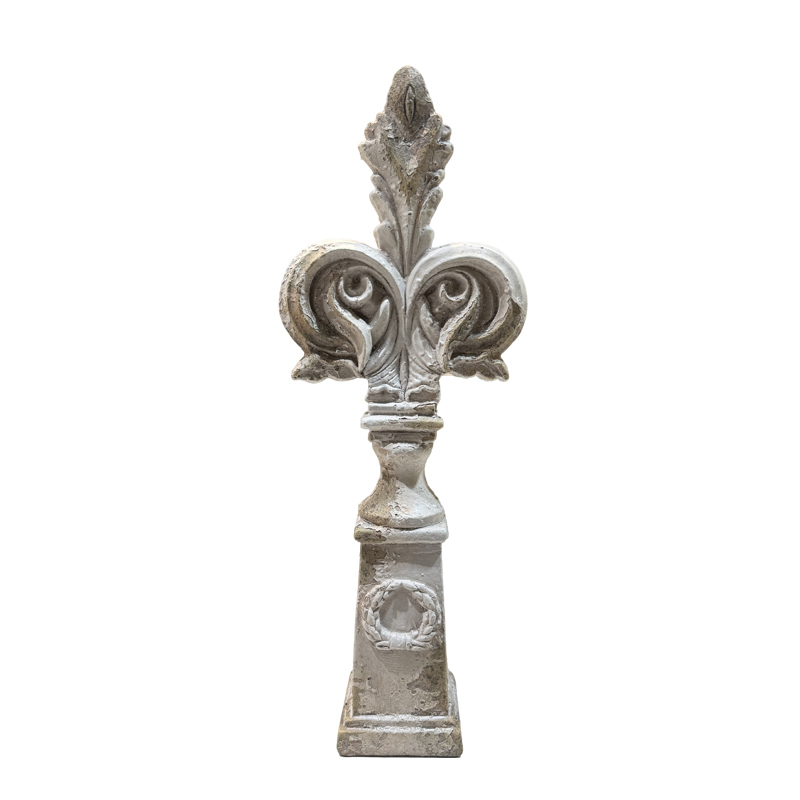
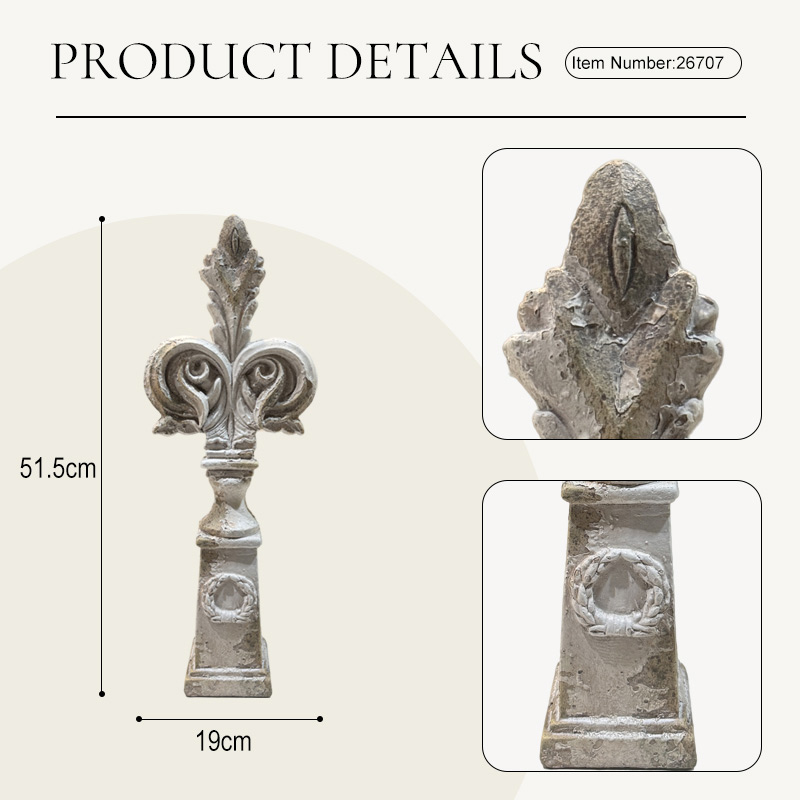
This fleur-de-lis decorative finial draws inspiration from the iconic royal symbol of France, seamlessly blending the graceful silhouette of the fleur-de-lis with a classic column structure. It is not just a decorative art piece steeped in historical charm, but also a striking focal point that elevates the style of any space. Measuring 51.5cm in height and 19cm in width, its well-proportioned design fits perfectly in entryways, living room corners, or as an accent for garden pillars, adapting effortlessly to various spatial layouts.
Exquisite Craftsmanship for Authentic Vintage Texture
Versatile Placement for Elevated Home Aesthetics
A Perfect Blend of Beauty and Durability
If you’re sourcing refractory materials, industrial ceramics, or high-temperature engineering parts, you’ve probably wondered: Is magnesia a ceramic? The simple answer is yes. Magnesia, also known as magnesium oxide (MgO), is a high-performance oxide ceramic. It is widely used in traditional refractory solutions as well as modern advanced structural ceramic applications across many industries.
What Is Magnesia (MgO)? Basic Overview
Why Magnesia Is Classified as a Ceramic Material
1. Inorganic Non-Metallic Composition
2. Typical Ceramic Microstructure & Physical Traits
-
High hardness and wear resistance: Sturdy and abrasion-resistant, with no flexible deformation like metal materials
-
Exceptional thermal stability: Boasts a melting point of 2800°C, keeping its structural integrity even under extreme high-heat conditions
-
Reliable electrical insulation: Low electrical conductivity at normal and medium temperatures, ideal for high-temperature insulating components
-
Strong chemical stability: Resists corrosion from most molten metals, alkaline solutions, and high-temperature oxidation
3. Standard Ceramic Manufacturing Process
Key Performance Advantages of Magnesia Ceramic
-
Superior high-temperature resistance: Remains stable up to 2400°C in oxidizing and nitrogen-protected environments, outperforming most conventional structural materials
-
Excellent molten metal corrosion resistance: Stands up to erosion from molten aluminum, nickel, uranium, and other alloys, making it perfect for metal smelting tools and furnace components
-
Balanced thermal performance: Features steady thermal conductivity and good thermal shock resistance, surviving rapid heating and cooling cycles without cracking or deformation
-
Flexible material customization: Can be blended with other materials or modified through advanced sintering techniques to create transparent magnesia ceramics and high-strength composite ceramic products
Main Industrial Applications of Magnesia Ceramic
-
Refractory Industry: Manufactured into refractory bricks, castables, and furnace lining materials for industrial kilns, steel smelting furnaces, and thermal processing equipment
-
Laboratory & Metallurgical Tools: High-purity magnesia ceramic crucibles, sintering trays, and high-temperature tubes for material melting, sintering, and laboratory testing
-
Electronic Insulation Parts: Used as insulating substrates and heating element insulation components in high-temperature electrical equipment, leveraging its strong dielectric strength
-
High-End Functional Ceramics: High-transparency magnesia ceramics for infrared optical windows, precision sensors, and specialized nuclear industry components